01
Narrative and previs
We define the game’s promise, reveal structure and spoiler boundaries. Concepts, scripts, storyboards or animatics are agreed before capture and scene production.
Trailers & Cinematics
Trailers serve the release. Cinematics develop the world and story. Each needs its own narrative and production plan.
Discuss a trailer or cinematic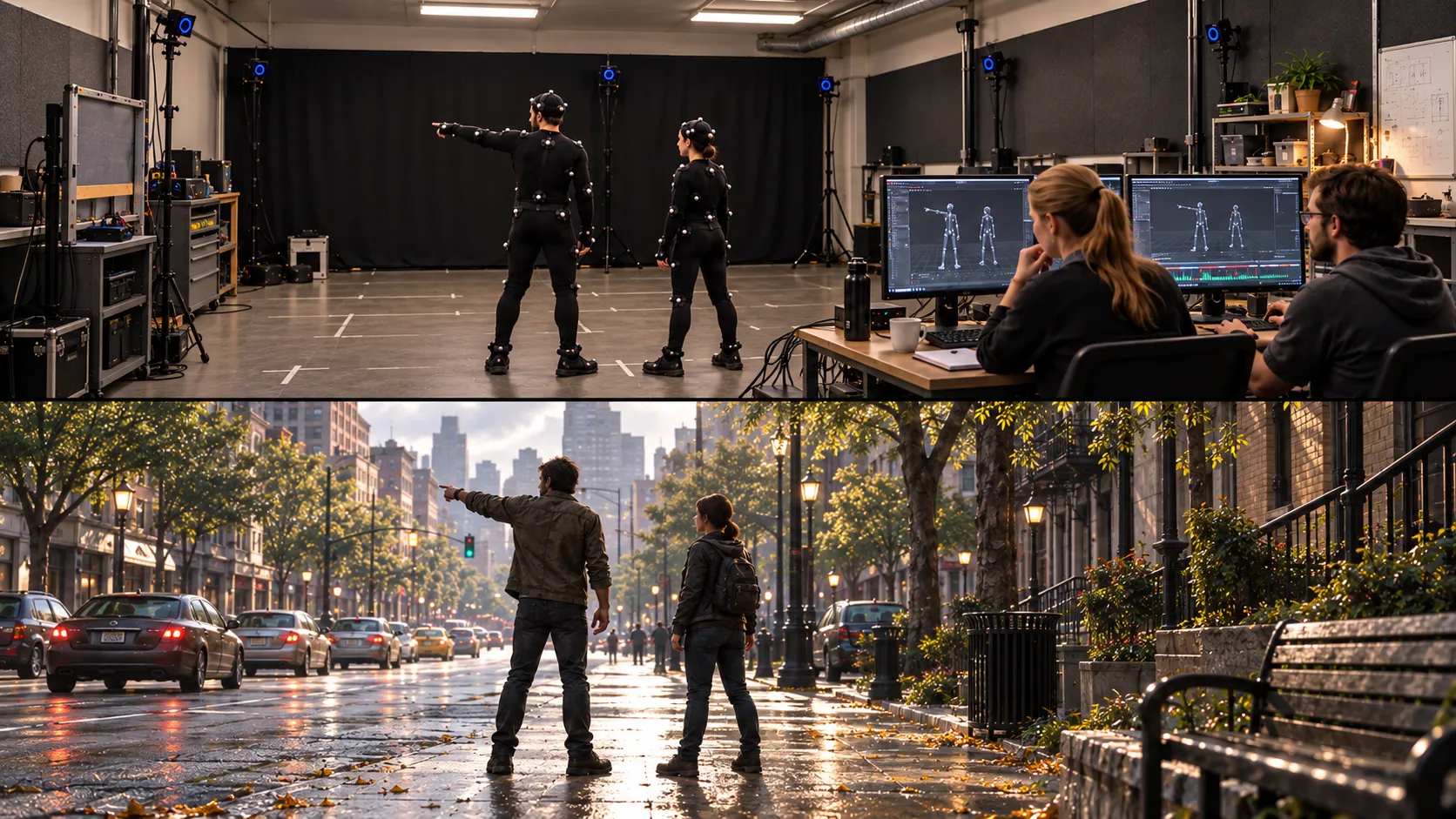
01 / Objective and approach
We create teasers, announcement and launch trailers, and staged cinematics for games and entertainment projects. A trailer communicates the game’s promise and invites discovery; a cinematic develops a world, character or story moment. Narrative structure and production scope are defined for each format.
For game studios, publishers, film teams and entertainment brands preparing an announcement, launch or narrative scene.
02 / Production scope
Scope and versions are agreed before production.
01
We define the game’s promise, reveal structure and spoiler boundaries. Concepts, scripts, storyboards or animatics are agreed before capture and scene production.
02
We edit available footage, plan agreed gameplay capture or create new CGI and animated scenes. The approach depends on development stage, build readiness and available assets.
03
Picture, sound, titles and end cards are finished for release. Delivery includes the master, specified shorter cuts, platform formats and agreed language versions.
03 / Production workflow
Key approvals come before the next production stage.
Release objective: clarify the audience, development stage, story promise, spoiler boundaries and available footage or game assets.
Concept and animatic: approve structure, pacing, key scenes and the plan for capture, editing or new production.
Picture production: carry out agreed capture, edit existing material or create new scenes, with staged reviews.
Sound and finishing: review pacing, titles, picture and sound; deliver approved masters, shorter cuts and localized versions.
04 / Before production
Scope, versions and terms are agreed for the project.
Gameplay capture needs an accessible build suitable for the agreed scenes; readiness is assessed before capture is planned. An edit may use supplied footage, while a cinematic may use separately agreed assets and production. A finished game build is not a universal requirement for every format.
A trailer serves an announcement or release: it communicates the game’s promise, builds interest and controls what is revealed. A cinematic develops a world, character or story moment as a staged sequence. Not every trailer needs new CGI scenes; format and scope follow the objective.
Working asset versions and approval points should be established before production. Changes after scene approval may require new capture, edits or renders. Their impact on scope, schedule and cost is discussed before work proceeds; no universal free-update policy is assumed.
Masters, shorter edits, titles, end cards and localizations are agreed for the release. Capture, new scenes, music and editable source files are separate scope decisions. The engine and technical approach follow available assets rather than a mandatory technology stack.
The next step
Send the synopsis, available footage or game assets, build information, references and release requirements. Gameplay capture, new characters or environments, music and source-file delivery are included only when agreed.
Discuss a trailer or cinematic